Intermediate Skills: Taking Your Game to the Next Level
Advanced techniques for players ready to move beyond basics, including near-side shots and ride-offs.
# Intermediate Polo Skills
You've mastered the basics, can hit the ball consistently, and have played several chukkas. Now it's time to develop the intermediate skills that separate competent beginners from effective players. This guide covers the techniques that will elevate your game.
## Mastering Near-Side Shots
Near-side shots (hitting on the left side of the horse) are technically demanding but essential for complete play.
### Near-Side Forehand
**The Challenge**: You're reaching across your body and the horse, which affects balance and power.
**Technique Refinements**:
- Lean your upper body over the horse's left shoulder while keeping your right leg secure
- Keep the mallet flat to the ground—avoid scooping
- Make contact ahead of the horse's front legs
- Use your core to power the swing, not just your arm
- Maintain soft elbows to absorb the horse's movement
**Practice Drill**: Set up cones and practice near-side hits at walking pace, focusing on form before adding speed.
### Near-Side Backhand
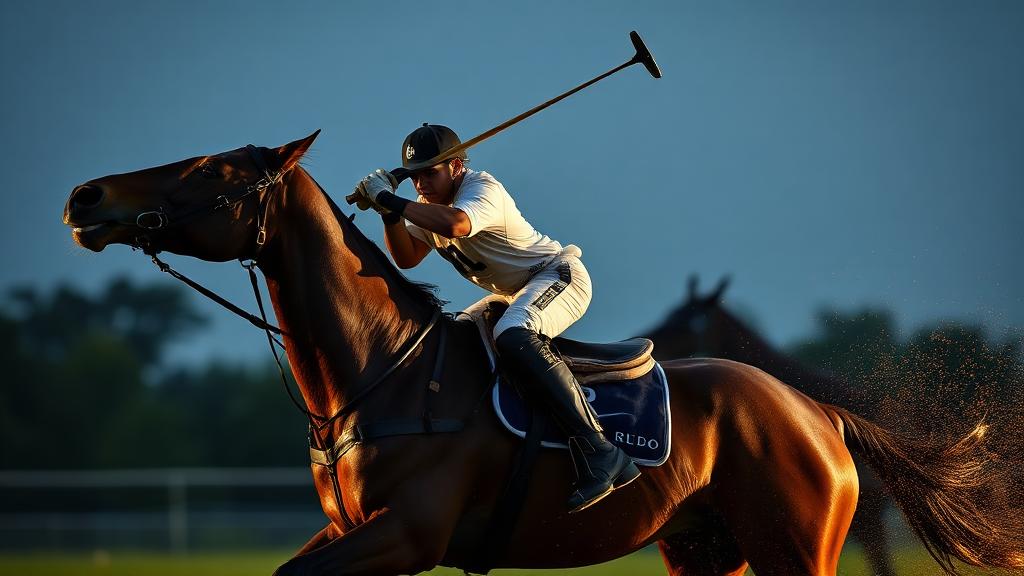
The near-side backhand is often considered polo's most difficult shot.
**Technique Refinements**:
- Rotate your upper body significantly to look behind your left shoulder
- Keep the mallet parallel to the ground during the swing
- Make contact when the ball is behind the horse's hip
- Follow through completely—incomplete follow-throughs cause mishits
- Practice at slow speeds until the motion becomes natural
## The Art of the Ride-Off
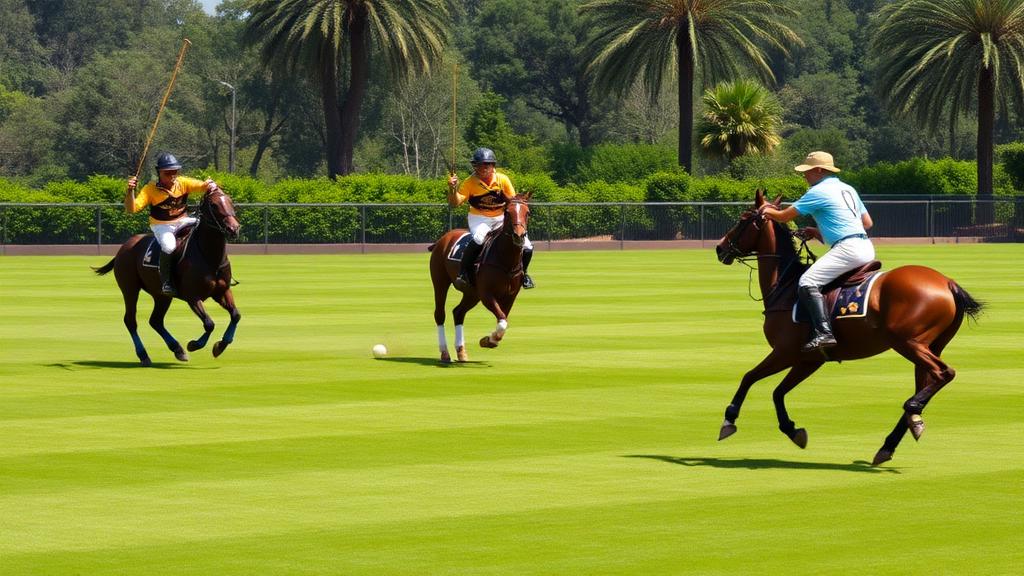
Ride-offs are controlled collisions used to push opponents off the line of the ball. They're legal, expected, and essential.
### Executing Effective Ride-Offs
**Approach**: Come alongside your opponent at a matching angle—never more than 45 degrees difference in direction.
**Contact**: Use your horse's shoulder against their horse's shoulder or hip. Never use your horse's hip to initiate contact.
**Pressure**: Apply steady pressure rather than sudden impacts. Think "push" rather than "bump."
**Safety**: Keep your mallet clear and watch for dangerous situations where horses could cross legs.
### Defending Against Ride-Offs
**Anticipate**: Read when opponents are setting up to ride you off.
**Counter-Pressure**: Lean into the ride-off rather than away—leaning away destabilises you.
**Escape**: Sometimes the best defence is acceleration—burst forward before the ride-off engages.
## Penalty Shots
As you progress, you'll be called upon to take or defend penalty shots.
### Penalty 2 (30-Yard Free Hit)
Taken from 30 yards with all defenders behind the goal line. This is a high-percentage scoring opportunity.
**Technique**: Focus on accuracy over power. Pick a side of the goal and commit to it.
### Penalty 4 (60-Yard Free Hit)
Taken from 60 yards with defenders 30 yards from the ball.
**Technique**: Hit firmly but don't overswing. A solid, accurate hit beats a wild powerful one.
### Penalty 5 (From the Spot)
Hit from where the foul occurred with no clear goal opportunity.
**Technique**: Focus on getting the ball upfield into a useful position for your team.
## Reading the Game
Intermediate players must develop tactical awareness beyond simply chasing the ball.
### Anticipation
- Watch where the ball is going, not just where it is
- Position yourself for the next play, not the current one
- Recognise developing patterns before they fully form
### Spacing
- Spread out to create options for teammates
- Don't cluster around the ball
- Maintain your positional discipline
### Communication
- Call for the ball when in a good position
- Warn teammates of approaching opponents
- Coordinate with your teammates on defensive marking
## Transitioning from Lessons to Matches
Competitive matches demand skills beyond practice sessions:
**Managing Pressure**: The intensity of real matches differs from friendly chukkas. Practice staying calm when stakes increase.
**Physical Demands**: Matches are more exhausting. Build your match fitness through extended chukka sessions.
**Decision Speed**: You'll have less time to think. Develop instinctive responses through repetition.
**Adapting to Opponents**: Each opponent plays differently. Learn to read and respond to various styles.
## Common Intermediate Mistakes
Avoid these common errors:
- **Over-Hitting**: Trying for power before accuracy is established
- **Ball Chasing**: Abandoning position to chase every ball
- **Ignoring Weaknesses**: Only practising shots you already can execute
- **Passive Riding**: Failing to engage in ride-offs when appropriate
- **Poor Horse Management**: Running horses too hard, too often
## Building Your Practice Routine
For steady improvement:
- Dedicate specific practice time to near-side shots
- Include ride-off practice with willing partners
- Work on stick-and-ball sessions between chukkas
- Watch high-level polo and analyse player positioning
- Record your own play to identify improvement areas
The intermediate stage is where polo becomes truly rewarding. You'll contribute meaningfully to your team, execute complex plays, and experience the full thrill of competitive polo. Stay patient, practice deliberately, and enjoy the journey toward mastery.