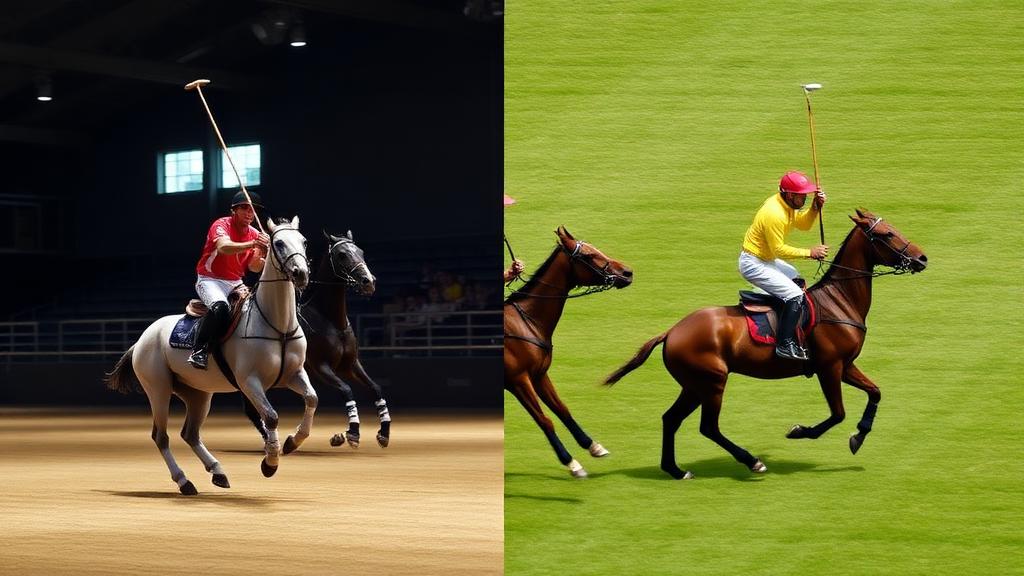
Arena vs Grass Polo: Entendiendo las diferencias
Compare el polo en pista cubierta con el polo tradicional sobre césped: reglas, equipamiento, caballos y cuál es el adecuado para usted.
Polo Arena vs Grass: ¿Cuál es el adecuado para ti?
El polo se juega en dos formatos principales: polo tradicional sobre césped en campos al aire libre y arena polo en espacios cerrados. Cada formato tiene características, reglas y atractivo distintos. Comprender estas diferencias te ayudará a elegir el formato adecuado para tu viaje al polo.
Superficie de juego y dimensiones
**Polo de hierba**:
**Arena Polo**:
Estructura del equipo
**Grass Polo**: Cuatro jugadores por equipo (posiciones 1 a 4), cada uno con roles distintos, desde el ataque hasta la defensa.
**Arena Polo**: Tres jugadores por equipo. El espacio más pequeño significa menos jugadores, lo que crea una mayor participación individual en cada jugada.
Diferencias de reglas
Si bien las reglas fundamentales siguen siendo similares, existen varias diferencias clave:
**Pelota**: Arena polo utiliza una pelota de cuero inflada más grande que rebota de manera más predecible. El polo sobre césped utiliza una pelota de plástico duro.
**Embarque**: En el polo de arena, la pelota se puede jugar desde las paredes laterales, de forma similar al hockey sobre hielo. Esto mantiene el juego continuo y requiere una conciencia táctica diferente.
**Chukka Duración**: Los chukkas en la arena suelen durar 7 minutos (en comparación con los 7,5 de los de hierba). Los partidos suelen ser de 4 chukkers.
**Derecho de paso**: Se aplican los mismos principios de línea de bola, pero el espacio cerrado crea situaciones de derecho de paso más frecuentes.
Requisitos del caballo
**Ponis de polo de hierba** necesitan:
**Los ponis de Arena Polo** necesitan:
Muchos caballos juegan ambos formatos, aunque algunos, naturalmente, se adaptan más a uno que al otro. Los tipos Cuarto de Milla a menudo sobresalen en el polo en la arena, mientras que los Pura Sangre prosperan en el césped.
¿Qué formato se adapta a los principiantes?
**Ventajas de Arena Polo para principiantes**:
**Ventajas del polo sobre hierba para principiantes**:
**Recomendación**: Muchos entrenadores sugieren comenzar con el polo en arena para desarrollar habilidades con el balón y luego hacer la transición al césped a medida que se desarrollan las habilidades.
Consideraciones estacionales
**Climas del norte**: El polo en arena permite jugar durante todo el año cuando los campos de césped están congelados o anegados. Muchos clubes utilizan el polo arena como programa de invierno.
**Climas más cálidos**: El polo sobre césped puede estar disponible durante todo el año, y el polo en arena ofrece un desafío táctico diferente en lugar de una necesidad climática.
Diferencias de equipo
**Mazos**: Los mazos de arena suelen ser un poco más cortos (50 a 52 pulgadas frente a 52 a 54 pulgadas) y pueden tener diferentes formas de cabeza para la bola más grande.
**Equipo de seguridad**: Los protectores faciales son obligatorios en el polo en arena debido al espacio más pequeño y los rebotes más rápidos. Son opcionales pero van en aumento en el polo sobre césped.
**Horse Tack**: Los caballos de arena a menudo usan diferentes protecciones para las piernas debido a la superficie de arena/sintética y a las demandas de giros más cerrados.
Haciendo tu elección
Considere estos factores:
La buena noticia: transferencia de habilidades entre formatos. Jugar polo en arena mejora tu juego sobre césped y viceversa. Muchos jugadores disfrutan de ambos y aprecian los desafíos y placeres únicos de cada formato.