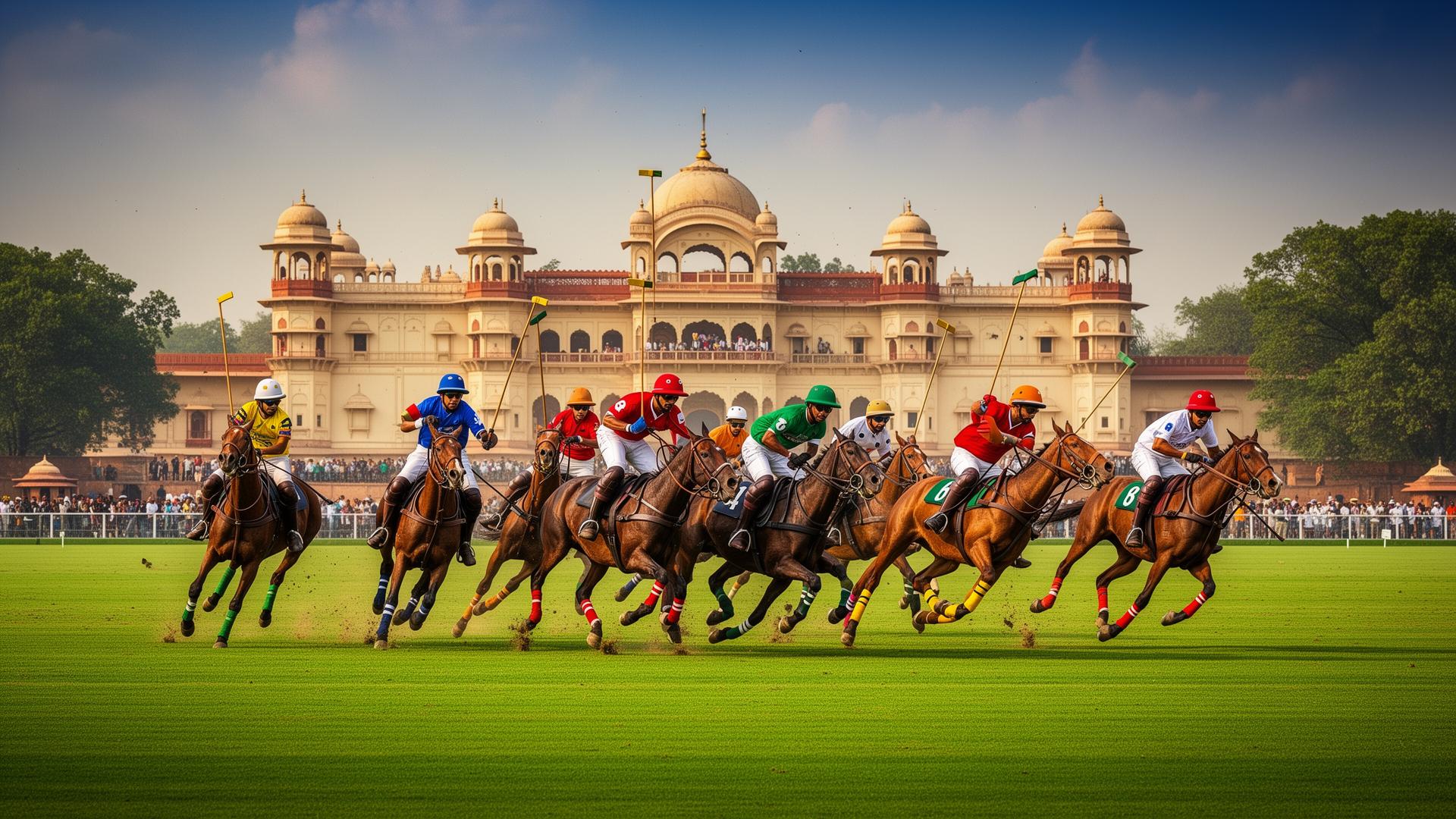
    Polo in India

    Polo in India

    India is the birthplace of modern polo, where British officers formalised the game in the 1860s. Today the country hosts iconic tournaments at the Jaipur Polo Ground and Kolkata's Maidan, with a rich heritage of royal patronage from the Maharajas who shaped the global sport.

    Polo in India

    India is the historical birthplace of modern polo. The sport remains active with clubs in Jaipur, Delhi, Mumbai, and Kolkata. The Indian Polo Association governs the sport. The season runs roughly November to March, with the Indian Open being the premier tournament.

    Season
    November – March
    Average cost
    Highly variable; lessons from ₹3,000
    Governing body
    Indian Polo Association (IPA)

    Season

    October to March, peak November-February

    Lesson Cost

    $50–$150

    Association

    Indian Polo Association (IPA)

    Clubs Listed

    16 clubs

    Club Locations in India

    Loading map...

    Showing 16 of 16 clubs with GPS coordinates

    Polo Clubs in India

    16 clubs

    Ahmedabad Polo Club

    ,

    The Ahmedabad Polo Club serves Gujarat's business capital and is the centre of polo in western India's commercial heartland. Founded by members of Ahmedabad's prominent industrial and trading families, the club reflects the city's entrepreneurial spirit and its tradition of patron-driven sporting excellence. Gujarat has produced some of India's most successful business dynasties, and the polo club has historically drawn its membership from this milieu, with industrialists and merchants bringing the resources and competitive ambition that sustain high-quality polo. The club hosts matches within the Gujarat polo calendar and competes in western India regional fixtures, connecting Ahmedabad's polo community to the broader national circuit centred on Jodhpur, Jaipur, and Mumbai. The grounds offer training facilities and equipment hire for newcomers, reflecting a commitment to polo development that looks beyond the established membership to new generations of players. Ahmedabad's polo is played against the backdrop of one of India's most dynamic commercial cities — a place where tradition and modernity coexist in constantly evolving tension, much as polo itself has navigated between its princely heritage and its twenty-first century identity as a global sport. The Ahmedabad Polo Club is an important link in the chain of western Indian polo institutions and a destination for visitors exploring the polo culture of the Rajasthan and Gujarat polo corridor.

    Lessons from

    Contact for pricing

    Season

    Year-round

    Chandigarh Polo Club

    ,

    The Chandigarh Polo Club is one of northern India's most distinguished polo institutions, rooted in the deep military polo tradition of Punjab. Founded in the era when the British Indian Army made polo an integral part of cavalry regiment culture, the club has maintained its connection to the armed forces while gradually opening to civilian membership and corporate participation. The grounds are situated in the elegant planned city designed by Le Corbusier, giving the club a unique setting that combines modern urban planning with the timeless sport of kings. The club maintains maintained grounds capable of hosting regional and national-level tournaments, and its calendar includes fixtures against other military and civilian clubs from Haryana, Himachal Pradesh, and Delhi. The Punjab Polo Association works closely with the club to coordinate the northern India polo season, typically running from February through April and again in October and November when temperatures permit outdoor play. Chandigarh's polo culture is deeply embedded in the Sikh warrior tradition of horsemanship, and many of the club's players come from families with multi-generational connections to both the armed forces and equestrian sport. The club offers training programmes for beginners and hosts regular chukkas for visiting players, making it a welcoming destination for polo tourists exploring northern India's equestrian culture.

    Lessons from

    Contact for pricing

    Season

    Year-round

    Delhi Polo Club

    ,

    Delhi Polo Club is the epicentre of Indian polo's rich military and aristocratic tradition, a venerable institution at the heart of the capital's equestrian life. Situated on the Parade Ground adjacent to Rashtrapati Bhavan — the Presidential Palace — the club operates in one of the world's most historically significant polo settings, where Maharajas and British cavalry officers competed generations ago and where today's national championships continue to be contested. The Delhi polo season runs through the winter months from October to March, taking advantage of the city's cool, clear weather. The club hosts the President's Cup and other national championship events, attracting the top players from across India and visiting international teams. Its facilities include multiple grass fields, professional stabling, and a distinguished clubhouse that reflects the club's long history.

    Lessons from

    Contact for pricing

    Season

    Year-round

    Jaipur Polo Club

    ,

    Jaipur Polo Club is India's most historic and storied polo institution, with roots stretching back to the late 19th century during the reign of the great Maharaja Sawai Madho Singh II, who codified polo rules and sent Jaipur teams to defeat British Army teams. Located in the Pink City of Jaipur, the club operates on grounds close to the Rambagh Palace area and remains a living monument to India's extraordinary polo heritage. The legendary "Tiger" Jai Singh of Jaipur — widely considered the finest polo player the world has ever seen — learned and refined his game here, and his spirit permeates the club's identity. Today, the club hosts the Jaipur Polo Season and welcomes international teams and visitors drawn by the romance of polo in a Rajasthani palace setting.

    Lessons from

    Contact for pricing

    Season

    Year-round

    Kolkata Polo Club

    ,

    Kolkata Polo Club lays claim to being the oldest polo club in the world, tracing its founding to 1862 when British cavalry officers and Indian aristocrats established organised polo competition on the Maidan — the vast open parkland at the heart of colonial Calcutta. If this dating is accepted, it predates all other formal polo clubs by several years and places Kolkata at the very origin of organised polo as a codified competitive sport. The club's Maidan ground, within sight of the Victoria Memorial and the racecourse, provides a polo experience steeped in history unique in the world. The club continues to operate and host polo competitions during the Indian winter season, maintaining a tradition that stretches back over 160 years to the British imperial period when Calcutta was one of the great cities of the empire.

    Lessons from

    Contact for pricing

    Season

    Year-round

    Mumbai Polo Club

    ,

    Mumbai Polo Club operates from its historic Mahalaxmi location in South Mumbai, positioned within one of the most storied equestrian districts in Asia and closely associated with the Willingdon Sports Club — one of India's most prestigious multi-sport institutions. Mumbai's polo tradition is rooted in the colonial era and has evolved into a corporate polo model in which India's business and financial elite drive the sport's participation and patronage. The club's schedule accommodates the Mumbai monsoon by operating through the dry winter and spring months, creating a polo season that draws participants from across India's western business corridor. As India's commercial capital, Mumbai provides a uniquely high-intensity patron market for polo, and the club serves as the interface between the sport and the city's corporate community.

    Lessons from

    Contact for pricing

    Season

    Year-round

    Mysore Polo Club

    ,

    The Mysore Polo Club is one of India's oldest and most historically significant polo institutions, tracing its origins to the royal court of the Wadiyar dynasty that ruled the Kingdom of Mysore for centuries. Polo was played at Mysore under royal patronage from the late nineteenth century, and the club that emerged from that tradition carries with it an extraordinary sense of continuity with the princely polo culture that made India the sport's second great home after its Manipur origins. The club's grounds are set within the broader cultural landscape of Mysore — a city renowned for its palaces, its silk, and its festivals — and the polo facilities reflect the royal standards that established the sport in the region. The Mysore Dasara celebrations have historically included polo as part of the royal programme, lending the club a ceremonial significance beyond its purely sporting function. In the contemporary era, the Mysore Polo Club participates in Karnataka state polo events and the broader southern India circuit, competing against clubs from Bangalore, Hyderabad, and the military cantonments of the Deccan plateau. The club maintains training facilities for young players and welcomes visitors with an interest in exploring India's royal polo heritage. Mysore represents an irreplaceable piece of Indian polo history — a living connection to the princely sporting culture that made India the polo world's most romantic destination.

    Lessons from

    Contact for pricing

    Season

    Year-round

    Rules in India

    Follows HPA rules. Historic clubs maintain local traditions.

    Full Rules Guide

    Handicap System

    Indian handicaps issued by IPA with international recognition.

    Handicap Guide

    Frequently Asked Questions

    Connect with polo players

    Join PoloConnect to see member profiles, chukka history, and connect with players at this club.