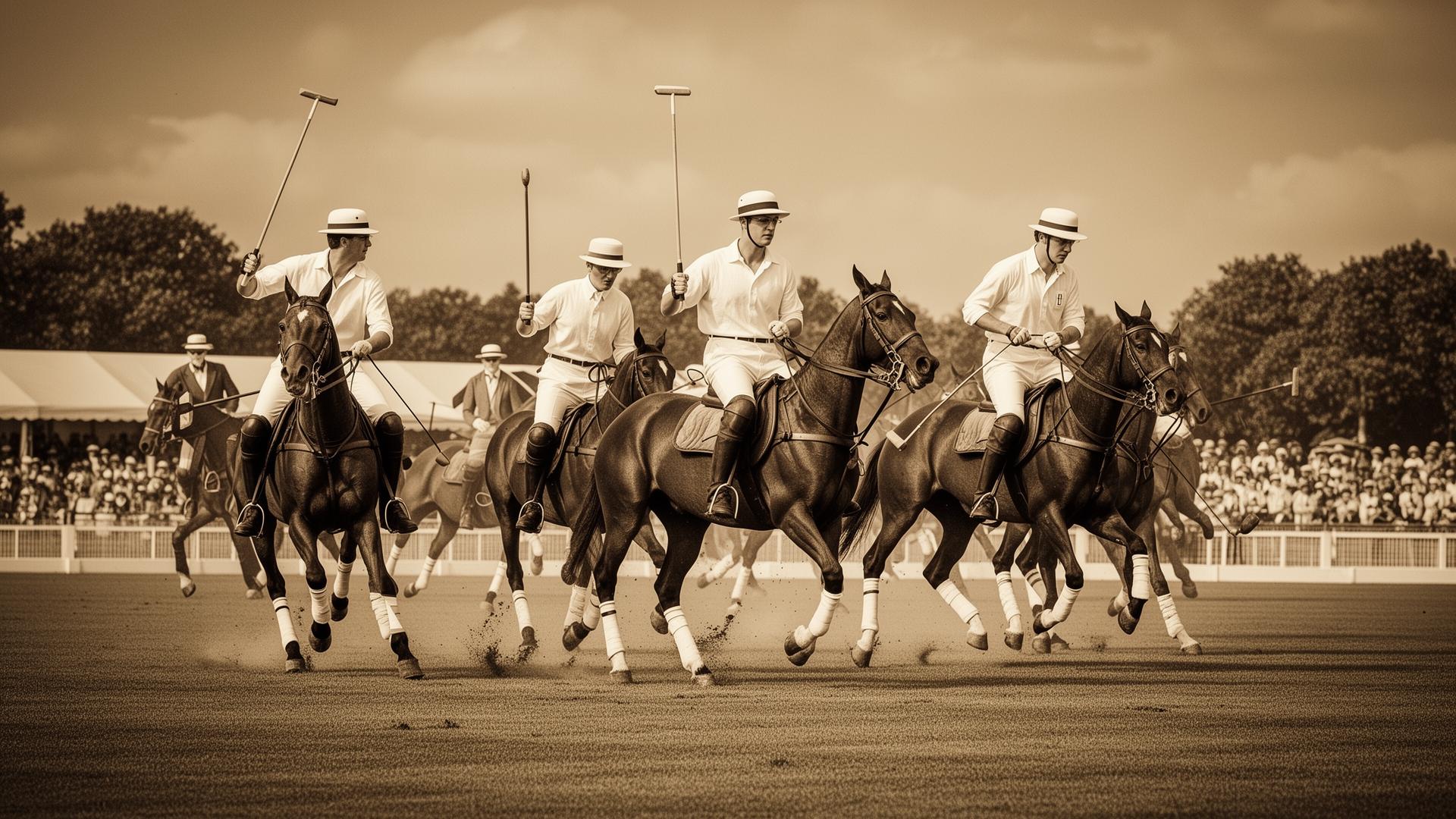
What is Polo?
Polo is the fastest team sport on horseback — a thrilling combination of speed, strategy, and masterful horsemanship that has captivated players and spectators for over 2,000 years.
A Brief History
Polo's origins trace back over 2,500 years to ancient Persia, where it began as a training exercise for cavalry units. The game spread along the Silk Road to China, India, and eventually to the British Empire in the 19th century.
Persian Origins
First played by Persian nobility and cavalry as military training
British Adoption
British tea planters in Manipur, India discovered and formalized the game
Hurlingham Rules
The Hurlingham Polo Association established standardized rules in England
Today, polo is played in over 70 countries worldwide, with Argentina, the UK, USA, and Dubai being major centers of the sport. The game has evolved but maintains its elegant tradition as "The Sport of Kings."
The Journey Through Time
Persia: The Birthplace
Polo originates in ancient Persia as "chogan" — a training exercise for elite cavalry units. It quickly became a national sport, played by kings and nobles.
Spreads to Asia
The game travels along the Silk Road to China, Japan, and India. Chinese emperors embrace it, and it becomes part of court culture.
Mughal India
The Mughal emperors, particularly Akbar the Great, revive and refine polo in India. The game flourishes across the subcontinent.
British Discovery
British tea planters in Silchar, India form the first European polo club. Lt. Joseph Sherer formalizes rules based on local Manipuri traditions.
Arrives in England
British cavalry officers bring polo to England. The first match is played at Hounslow Heath, and clubs quickly form across the country.
Reaches America
James Gordon Bennett Jr. introduces polo to the United States. The first American match is played at Dickel's Riding Academy in New York.
Argentine Polo Born
English settlers establish polo in Argentina. The country would eventually become the world's polo capital, producing the finest players.
Olympic Era
Polo is featured in five Olympic Games. Argentina, Great Britain, and the USA dominate the competitions.
Global Sport
Polo thrives in 77+ countries with major hubs in Argentina, UK, USA, Dubai, and Australia. The Argentine Open remains the world's most prestigious tournament.
How the Game Works
Polo is played between two teams of four players each, on a grass field the size of nine American football fields.
4 Players Per Team
Each player has a designated position: #1 (forward), #2 (offense/defense), #3 (tactical leader), #4 (defensive)
4-8 Chukkas
Games are divided into periods called "chukkas" lasting 7-7.5 minutes each. Players change horses between chukkas.
300 × 160 Yards
The outdoor field is the largest in organized sport — roughly 9 American football fields combined.
Goal Scoring
Teams score by hitting the ball between the goalposts. Teams switch direction after each goal to ensure fairness.
Player Positions Explained
Each of the four positions requires unique skills and plays a distinct role in team strategy
The Forward
Primary Goal Scorer
The #1 player is the primary offensive player, positioned closest to the opposing goal. They must be quick, agile, and an excellent goal scorer. Their main job is to convert opportunities into goals and create scoring chances.
- Fast starts and sprints to the goal
- Accurate finishing under pressure
- Marks opposing #4 (back) player
The Hustler
Attack & Defense Hybrid
The #2 player is the team's engine room — covering more ground than any other position. They support the #1 in attack while also helping defensively. This demanding role requires exceptional stamina and versatility.
- Supports attacks and creates plays
- Covers the most distance per game
- Marks opposing #3 player
The Pivot
Team Captain & Playmaker
The #3 is traditionally the best player on the team and acts as the tactical leader. They orchestrate attacks from midfield, deliver long passes to #1 and #2, and direct the team's strategy on the field.
- Usually the highest-handicapped player
- Master of long passes and strategy
- Often takes penalty shots
The Back
Defensive Anchor
The #4 player is the last line of defense, protecting the goal area. They must be excellent at clearing the ball with powerful backhand shots and reading the opposing team's attacks.
- Powerful backhand for clearances
- Positions to cover goal threats
- Initiates attacks with long hits
The Polo Pony
Despite being called "ponies," polo horses are actually full-sized horses, typically standing 15-15.3 hands (60-63 inches). The term dates back to when the sport had height restrictions.
These elite athletes are specifically bred and trained for polo. The best polo ponies come from Argentina, where Thoroughbred bloodlines are crossed with local Criollo horses to produce animals with speed, agility, and the temperament for the game.
What Makes a Great Polo Pony?
Types of Polo
Outdoor (Grass) Polo
The traditional and most prestigious form of polo, played on a large grass field. This is what most people picture when they think of polo — four players per team, on a massive 300 × 160 yard field.
- Field size: 300 × 160 yards (up to 200 yards with boards)
- 4 players per team
- Typically 4-6 chukkas
Global Polo Centers
While polo is played worldwide, these regions are considered the heart of the sport
Argentina
The World Capital
Home to the most 10-goal players and the prestigious Argentine Open. Buenos Aires is polo's spiritual home.
United Kingdom
Traditional Home
The birthplace of modern polo rules. Guards Polo Club and Cowdray Park host the English season.
United States
Palm Beach & Beyond
Wellington, Florida is the winter polo capital. Santa Barbara leads the West Coast scene.
UAE
Desert Dynasty
Dubai has become a major polo destination with world-class facilities and royal patronage.
Australia
Antipodean Growth
Rapidly growing polo scene with major facilities in NSW and Queensland.
Spain
European Hub
Sotogrande hosts the famous Santa María Polo Club and summer season.
Essential Equipment
Every polo player needs specialized equipment designed for safety and performance
Polo Mallet
$80-300Cane shaft with hardwood head (tipa or sycamore), 48-54 inches long depending on horse height. Held in right hand only.
Polo Ball
$10-25Hard plastic sphere, 3-3.5 inches diameter, weighing 4-4.5 oz. White for grass, colored for arena and snow polo.
Polo Helmet
$150-500Mandatory protective headgear meeting safety standards. Some leagues require face guards. Must be replaced after impacts.
Polo Boots
$300-800Knee-high leather boots providing ankle support, protection from mallet swings, and secure stirrup grip.
Knee Guards
$80-200Padded protection worn over riding breeches to protect from ball strikes and mallet contact.
Polo Whip
$30-80A short whip used to encourage the horse. Strict rules govern its use — excessive use results in penalties.
Gloves
$40-120Leather gloves for grip and protection. Essential for mallet control, especially in wet conditions.
Riding Breeches
$80-250Stretchy, reinforced trousers allowing freedom of movement. White is traditional for tournaments.
Polo Saddle
$1,500-5,000Lightweight, close-contact saddle allowing maximum rider movement. Fitted specifically for polo.
The World's Greatest Tournaments
These prestigious events represent the pinnacle of competitive polo
Argentine Open
The "Wimbledon of Polo" — the world's most prestigious tournament held annually at Palermo, Buenos Aires. Only 40-goal teams compete in this ultimate test of polo excellence.
Gold Cup (UK)
The flagship event of British polo, held at Cowdray Park. Part of the English high-goal season and a major social event attracting royalty and celebrities.
US Open
America's premier polo championship, held in Wellington, Florida. The highlight of the winter high-goal season with 26-goal teams competing.
Dubai Gold Cup
The Middle East's flagship tournament, showcasing Dubai's rise as a global polo destination with world-class facilities and international competitors.
Legends of the Sport
The greatest players to have graced the polo field
Adolfo Cambiaso
1990s-Present
Widely considered the greatest polo player of all time. Has won the Argentine Open 11+ times.
Juan Martín Nero
2000s-Present
Long-time partner of Cambiaso, known for incredible stick work and goal scoring.
Pablo Mac Donough
2000s-Present
Multiple Argentine Open winner, exceptional defensive player and team leader.
Facundo Pieres
2000s-Present
One of the most talented players of his generation, known for flair and creativity.
Polo Etiquette & Culture
Polo has a rich tradition of etiquette and sportsmanship that extends beyond the rules of the game.
Divot Stomping
At halftime, spectators are invited onto the field to stomp divots — replacing the turf kicked up by horses. A beloved social tradition.
No Shouting at Horses
Players never shout at or blame their horses. The bond between player and pony is sacred in polo culture.
Dress Code
Spectators often dress elegantly, especially at high-goal matches. Large hats and summer dresses are common for women; blazers for men.
Third Man Toast
At post-match gatherings, it's customary to toast the umpires who made difficult calls during the match.
The Polo Lexicon
Frequently Asked Questions
Common Polo Misconceptions
Let's debunk some common myths that prevent people from trying this incredible sport.
"Polo is only for the ultra-wealthy"
Group lessons start at $100, and many clubs offer scholarship programs and shared pony arrangements. Some clubs like Detroit Polo School offer affordable entry points.
"You need to own horses to play"
Most clubs offer horse hire ($50-250 per chukka), and many players never own a pony. Lesson programs always include mounts in the fee.
"Polo is too dangerous to try"
With modern NOCSAE-approved helmets, proper training, and safety rules, polo has a lower injury rate than many equestrian sports. Beginner lessons use calm, experienced ponies.
"You need years of riding experience"
Many programs teach riding alongside polo skills. The USPA Intercollegiate program has produced players who started with zero equestrian background.
"It takes forever to improve"
With consistent weekly practice, most beginners can participate in low-goal club games within a year. Modern training methods accelerate learning.
"Polo is only played by men"
Women's polo is growing rapidly with dedicated tournaments, separate handicap systems in major associations, and stars like Mia Cambiaso reaching 10-goal ratings.
Track your polo journey
Log lessons, monitor skill development, and celebrate milestones as you progress from beginner to competitor.
Ready to Learn More?
Dive deeper into polo with our comprehensive guides on rules, lessons, costs, and more.
Last updated: May 2026